
Teeth can sometimes become inflamed, making extraction of the inflamed tooth the solution in some cases. Can an inflamed tooth be extracted during inflammation? What are the causes of tooth inflammation? Are there other treatment methods? Follow us to find the answers to these questions and more.
Signs of Tooth Inflammation
There are signs that indicate inflammation inside a tooth, and these signs can include:
- Gum inflammation around the tooth with swelling.
- Spread of redness in the gums in the area surrounding the tooth.
- Potential for gum bleeding.
- Swelling and puffiness of the gums.
- Feeling severe pain in the teeth, especially when consuming hot or cold drinks.
- Swelling in the cheek area, especially near the tooth.
The appearance of any of these signs is an important indicator of the need to visit a doctor, especially since this inflammation can lead to an infection in the area, and if left untreated, it can cause a dental abscess, which may affect the jawbone and overall oral health.
Causes of Tooth Inflammation
The primary cause of inflammation may be the accumulation of bacteria that cause infection over time, especially since these bacteria find an opportunity to grow inside the mouth and within the tooth roots when oral hygiene is neglected and diets rich in sugars are consumed.
Should an inflamed tooth be extracted?
Some may believe that it is necessary to wait for some time and take antibiotics before tooth extraction, but recent studies have shown that the tooth should be extracted as soon as possible to prevent it from causing an infection that could spread to the tissues surrounding the tooth.
Although most people and some doctors believe that using antibiotics is the initial step to reduce inflammation, a study conducted on 82 patients proved that extraction of an inflamed and infected tooth should not be delayed.
You may also be interested in: When should a tooth be extracted?
Can an inflamed tooth with an abscess be extracted?
Inflamed teeth containing an abscess are extracted because they can cause side effects that may affect the neck, jaw, and head. Therefore, it is important for the doctor to drain the abscess under the tooth and extract the tooth.
Especially since the inflammation may have damaged the tooth nerves, meaning the teeth cannot be repaired in any way, and extraction is the only solution to get rid of inflammations that may affect a person's life if the inflamed tooth is not extracted.
Method of Inflamed Tooth Extraction
After examination and determining that extraction of the inflamed tooth is the only solution to get rid of the inflammation, especially when there is no alternative solution such as filling the tooth or repairing the nerve canal, the doctor then prepares the patient for the extraction procedure by:
Anesthesia
The gums in the area surrounding the inflamed tooth are anesthetized so that the patient does not feel any pain during the extraction procedure.
Extraction Procedure
In some cases of severe inflammation, the doctor may make an incision in the gum tissue to be able to extract the inflamed tooth. One of the specialized dental extraction tools is used to remove the tooth from its place.
Cleaning the Extraction Site
The doctor cleans the area to ensure there are no remaining abscess residues, if present.
Placing Cotton to Stop Bleeding
Cotton is placed on the extraction site to prevent continued bleeding, and the doctor asks you to gently press on the cotton to apply some pressure to the bleeding site, as this step helps stop the bleeding.
Post-Inflamed Tooth Extraction Treatment
The doctor will certainly prescribe some medications to deal with the inflammation, which may be in the form of antibiotics or pain relievers. The doctor will give a full course of antibiotics with the aim of preventing infection, and you must adhere to the full course and take the medications on time.
The best pain reliever after extracting an inflamed tooth
Antibiotics containing acetaminophen or ibuprofen are prescribed to relieve pain after extraction. These pain relievers are usually taken 4 times a day, i.e., every 6 hours, unless the doctor indicates another way to take them and specifies different times for taking them.
How long should antibiotics be used after extracting an inflamed tooth?
Antibiotics are usually used after extracting inflamed teeth to reduce the effect of infection. The doctor prescribes one type of antibiotic for a week or more, depending on the person's condition.
When does the extraction site heal?
It is normal to feel pain after the extraction, especially with inflammation, but the duration of this pain varies from one case to another based on different factors, including the percentage of inflammation in the tooth and your health condition.
This is in addition to the method the doctor used to extract the tooth, but the pain is expected to begin to fade over time until it disappears after several days, and the extraction site may heal and disappear within two weeks, which is the period the bone needs to return to normal.
However, prolonged pain after extracting an inflamed tooth means there is a problem that requires you to visit the doctor, especially if any of the following signs appear:
You may also be interested in: Methods of replacing an extracted tooth
Signs of inflammation after tooth extraction
Removing an inflamed tooth may sometimes result in an infection that causes you to feel more pain, especially since this pain is accompanied by other signs:
- Swelling in the facial area, which appears significantly several days after extraction.
- Swelling of some glands located under the jaw or in the neck area.
- Gum inflammation accompanied by severe redness.
- Bad breath.
- Discharge of pus from the extraction site and the surrounding area.
- Feeling a change in the taste of the mouth, either by feeling bitterness or another unpleasant taste.
- Bleeding returns again and more severely.
- Problems and inability to chew or swallow food normally, and in some cases, it may even lead to
- Speech and breathing problems.
- Body tremors accompanied by fever.
These signs are a strong indicator of an infection that may be the beginning of an abscess forming at the extraction site.
Abscess formation after extraction of an inflamed tooth
Abscesses may appear even after the extraction of an infected tooth, especially if the doctor's instructions are not followed, the area's hygiene is neglected, and medications are not taken correctly. However, in some cases, the abscess may not be properly cleaned and completely drained.
Consequently, the body begins to resist this part as a type of infection, especially since its effect begins to spread to adjacent tissues. At that point, the doctor will prescribe antibiotics again or may intervene with a surgical procedure to reach and completely clean this part.
The appearance of an abscess after tooth extraction is completely similar to the signs of inflammation, showing redness with pus, in addition to the redness. This image can help you identify its shape:
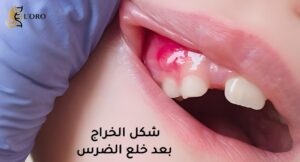
For this reason, we advise you to fully adhere to the treating doctor's instructions to ensure that inflammation and infection do not occur again. Here are the most important instructions that must be followed:
Tips after extracting an inflamed tooth
Remember to always make your motto that prevention is better than cure, and in your case, adhering to the doctor's instructions will be the decisive factor in preventing the recurrence of infection. The most important steps include the following:
- The first step begins with preserving the blood clot that formed after the extraction process, which plays a fundamental role in the healing process. To preserve it, you must avoid rinsing your mouth during the first 24 hours and avoid touching the area.
- Take antibiotics on time and in the doses prescribed by the doctor.
- Clean and care for the mouth, and use antiseptic mouthwash and saline solution for rinsing to maintain the cleanliness and sterilization of the area.
- Eating specific food after tooth extraction depends on soft foods and avoiding hard foods that may cause the extraction site to open again, especially during the first few days.
- Avoid smoking and alcohol.
- Monitor the extraction site to ensure that no signs appear that may indicate an infection in the area.
Extracting an inflamed tooth may be the only solution for the doctor in cases of severe infection where the inflammation cannot be treated with antibiotics or the tooth nerve can be treated.
Therefore, it is important to choose a doctor who can assess the condition and treat the problem without complications. You can consult one of L'ORO Clinic's doctors for the extraction of an inflamed tooth, as the doctors will provide you with an effective treatment plan, so Book an appointment with us.
Frequently Asked Questions
Can an inflamed tooth be extracted at home?
No, it must be extracted in the clinic under the supervision of a doctor to avoid problems and prevent the spread of infection.
Is extracting an inflamed tooth dangerous?
No, especially since leaving it in some cases may be more dangerous due to increased chances of damage to the tissues adjacent to the inflammation.
Can a tooth be extracted while it is inflamed?
Yes, if the methods of treating the inflammation are unsuccessful, then extraction is the only solution.
Does the abscess disappear after tooth extraction?
Yes, if the area is thoroughly cleaned without leaving any trace of the abscess or the resulting infection.
Is an inflamed tooth extracted before completing the antibiotic course?
Yes, and in some cases, extraction may be done before taking antibiotics at all.
What is the risk of extracting an inflamed tooth?
Extracting an inflamed tooth usually poses no risk; in fact, leaving it may cause greater problems, especially if the infection is very severe.
Can a tooth be filled while it is inflamed?
Dentists generally prefer not to perform fillings in the presence of inflammation, especially if the root canal is intact. In such cases, the dentist focuses on reducing the inflammation first, then filling the tooth instead of extracting it.
.