
An impacted wisdom tooth is one of the most common dental problems, which a dentist may deal with in different ways. So, what is it? What are its most important symptoms? And what are the causes of an impacted wisdom tooth? Follow us in this article to learn all about this, in addition to its treatment methods.
What is an impacted wisdom tooth?
It is a wisdom tooth that has not been able to grow naturally and has not been able to erupt through the gums, causing part of the tooth to remain inside the gum or jaw, or the entire tooth may be located under the gum, leading to a number of problems that affect oral health.
What are the symptoms of an impacted wisdom tooth?
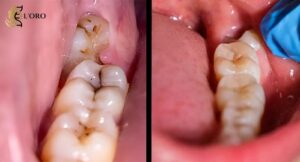
If the tooth is fully impacted, it will be completely hidden under the gum, but if it is partially impacted, part of the tooth will be visible, while the rest of the tooth will be buried under the gum. Whether the tooth is fully or partially impacted, it will lead to the appearance of some symptoms that may appear over time, including:
- Pain in the jaw area near the tooth or in the face.
- Swelling of the area where the tooth is located, leading to swelling of the face near it.
- Inflammation of the gums in the area surrounding the impacted wisdom tooth.
- Possibility of bleeding at times.
- Feeling pressure in the area.
- Possibility of infection.
- Damage to teeth near the impacted wisdom tooth.
- Bad breath with a change in the taste in the mouth.
- Inability to open the mouth completely.
Types of impacted wisdom teeth
In addition to being partially or fully impacted, an impacted wisdom tooth can be divided into four main types:
- Mesial impaction, which is when the tooth grows at an angle towards the front.
- Distal impaction, where the tooth is angled towards the back of the mouth, which is a rare type.
- Vertical impaction, which is a tooth that cannot erupt naturally and is therefore impacted below the gum despite being correctly positioned.
- Horizontal impaction, where the tooth cannot erupt through the gum due to its sideways growth within the gum, causing pain and pressure on adjacent teeth.
In addition to these main types, there are cases that illustrate the mechanism by which the tooth was impacted. Sometimes the tooth has already emerged from the jawbone but has not been able to penetrate the gum tissue, while in other cases the tooth is impacted under the gum and below the bone, because the tooth did not penetrate the bone in the first place.
This image illustrates the difference between a partially or fully impacted wisdom tooth:
Causes of an impacted wisdom tooth
These teeth are usually impacted because they do not find enough space in the jaw to grow properly, but in other cases, the reason may be that these teeth grow at an incorrect angle.
This leads to their impaction. These teeth usually appear in people between the ages of 17 and 25, especially if they suffer from a small jaw structure or if there is overcrowding of teeth in the mouth, which affects the eruption of the wisdom tooth.
Complications of an impacted wisdom tooth
Often, the tooth can remain without causing any problems, but in many cases, this impacted tooth can lead to major problems, including:
- Gum diseases and severe inflammation.
- Abscesses.
Wisdom Tooth Inflammation
.- The appearance of fluid-filled cysts, especially in the jawbone, and these fluids can lead to damage to the jawbone.
- Infection, which may affect the gums and teeth.
- Severe tooth decay.
- Benign tumors, but they are relatively rare.
- Inflammation of the skin and its tissues, especially in the cheek, tongue, and throat.
Impacted wisdom tooth and its effect on the ear
If an infection occurs due to an impacted wisdom tooth, the person may experience ear pain accompanied by jaw pain and a headache.
Effect of wisdom tooth on the brain
An impacted wisdom tooth can cause headaches in some cases, leading to pain in the brain, which is usually accompanied by jaw and facial pain.
Wisdom Tooth Pressure on the Nerve
Nerves located near an impacted wisdom tooth can be affected by the growth of cysts near the impacted tooth. These fluid-filled cysts can cause damage to the nerves as well as the bones adjacent to these nerves.
How is an impacted wisdom tooth diagnosed?
The dentist can diagnose an impacted wisdom tooth and other dental problems through visible symptoms, an examination of the gum and tooth area, and finally, by using X-rays, which will show the position and condition of these teeth.
Treatment for an Impacted Wisdom Tooth
The treatment method adopted varies depending on the tooth's position. If the tooth is not causing symptoms, the dentist may not resort to extraction.
However, most dentists prefer to extract it because it causes various dental diseases due to the difficulty of cleaning an impacted wisdom tooth, which leads to bacteria accumulation and the appearance of abscesses. Therefore, the dentist may resort to an impacted wisdom tooth extraction procedure:
Impacted Wisdom Tooth Extraction Procedure
Whether you are having an impacted wisdom tooth extracted from the lower or upper jaw, the dentist will need to anesthetize the area locally or generally to make incisions in the gums to facilitate the procedure. Wisdom Tooth Extraction.
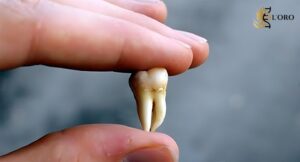
Appearance of the Wisdom Tooth After Extraction
Learn more about Method of Extracting an Impacted Tooth
Can an impacted wisdom tooth be treated at home?
Initially, you can take several steps to relieve the pain and symptoms you are experiencing, but these are not a fundamental solution to the problem. So, to relieve the pain you feel:
- Use over-the-counter pain relievers.
- Use a saline solution, which can be prepared with a teaspoon of salt and some warm water, and rinse with it daily.
- Use a mouthwash containing chlorhexidine, as it has properties that help eliminate bacteria.
- If the pain persists, you will need to visit a doctor who will prescribe some antibiotics or extract the tooth.
An impacted wisdom tooth is a common problem that many people experience, and it can be easily managed by consulting a specialized dentist. If you are suffering from an impacted wisdom tooth, you can book an appointment at L'ORO Clinic to assess your condition and receive the appropriate treatment plan.
Frequently Asked Questions
Is impacted wisdom tooth common?
Yes, as up to 90% of people can have an impacted tooth.
Is an impacted wisdom tooth dangerous?
An impacted tooth can cause infection, pain, and many other oral problems.
Is an impacted wisdom tooth painful?
Extracting an impacted wisdom tooth may be more painful compared to regular extractions, but you may not feel more pain during its removal, especially with pain relievers.
When does the wound heal after impacted wisdom tooth extraction?
You can fully recover within one to two weeks after the extraction procedure.
Should an impacted wisdom tooth be extracted?
The situation varies from case to case, especially if the tooth is not causing any problems. However, it is extracted if any symptoms appear that could affect dental health.